The Evolution And Influence of Gospel Music
This page is all about my Podcast Project I completed in 2025 for college.
The brief was to record a historical podcast and discuss a genre of music, identify key artists/composers relating to the genre and to identify the stylistic content of the music.
I had to submit both video and audio recording for this project and recieved seperate grades for each. Both achieved a high grade and I am happy with the outcome for the limited time I was given.
However, in the future if I had a similar project I would record in a more professional environment and spend more time adding my personality to the project.
I have also recorded this podcast in a recording booth, I will upload the WAV file here as well.
Transcript:
Before Gospel music as we know it today, there was African American folk music and religious hymns.
These sounds were born in the late 18th and early 19th centuries from the experiences of enslaved Africans who were brought over to America.
Slave owners did not allow them to use traditional African instruments, or sing in their native languages.
The church was a sanctuary for Black slave expression. It was the only place that groups of slaves could congregate without fear of white supervision.
These songs were more than just melodies, they were a way to express pain, hope, and faith, often shared through oral tradition and communal singing.
As time went on, these early folk tunes mixed with hymns and evolved into what we call Gospel music.
A genre that shaped nearly all modern music, from soul and blues to jazz and R&B.
Gospel is known for its energy, emotion, and community spirit,
often built around call and response, deep soulful powerful vocals, and body percussion like clapping and stomping and clicking.
In church settings, piano and organ were common instruments, depending on what the congregation could afford.
As Gospel evolved, drums, bass guitar, banjo, and electric guitar became more common. adding rhythm and drive to the message.
Communities often donated money to buy instruments, showing how central music was to worship and to spreading hope. The music’s purpose was not only spiritual and moral, but also a form of communication and resistance.
Gospel’s political influence can’t be ignored. It gained momentum during the 19th-century religious revivals and again in the 20th-century Civil Rights Movement,
where it became a voice of strength, unity, and protest. Songs of faith also became songs of freedom.
In the early 20th century, Gospel choirs often wore simple black robes, symbolizing humility and the seriousness of their spiritual message.
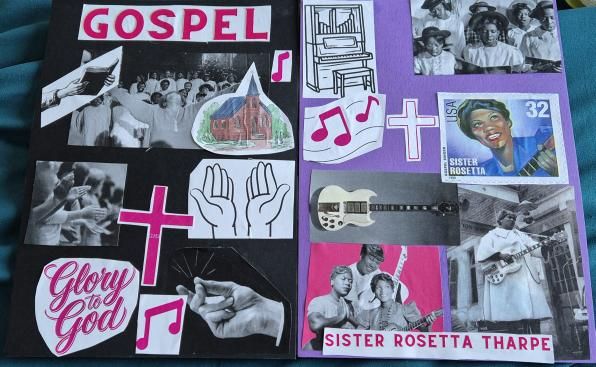
Some of the most influential artists in this genre include Sister Rosetta Tharpe and Marie Knight, true pioneers whose careers began with gospel music. They blended sacred music with rhythm, funk and blues, laying the groundwork for rock and roll.
Gospel Music a story of resilience, community, and faith that continues to echo through the modern music of today.
References:
https://www.womenshistory.org/education-resources/biographies/sister-rosetta-tharpe
https://www.earlygospel.com/origins/